Madeiran Food: Espetada, Lapas, Poncha and Wine
What to eat in Madeira: espetada in Estreito de Câmara de Lobos, bolo do caco, poncha, Madeira wine at Blandy's, and the limpet closed season to 31 May.
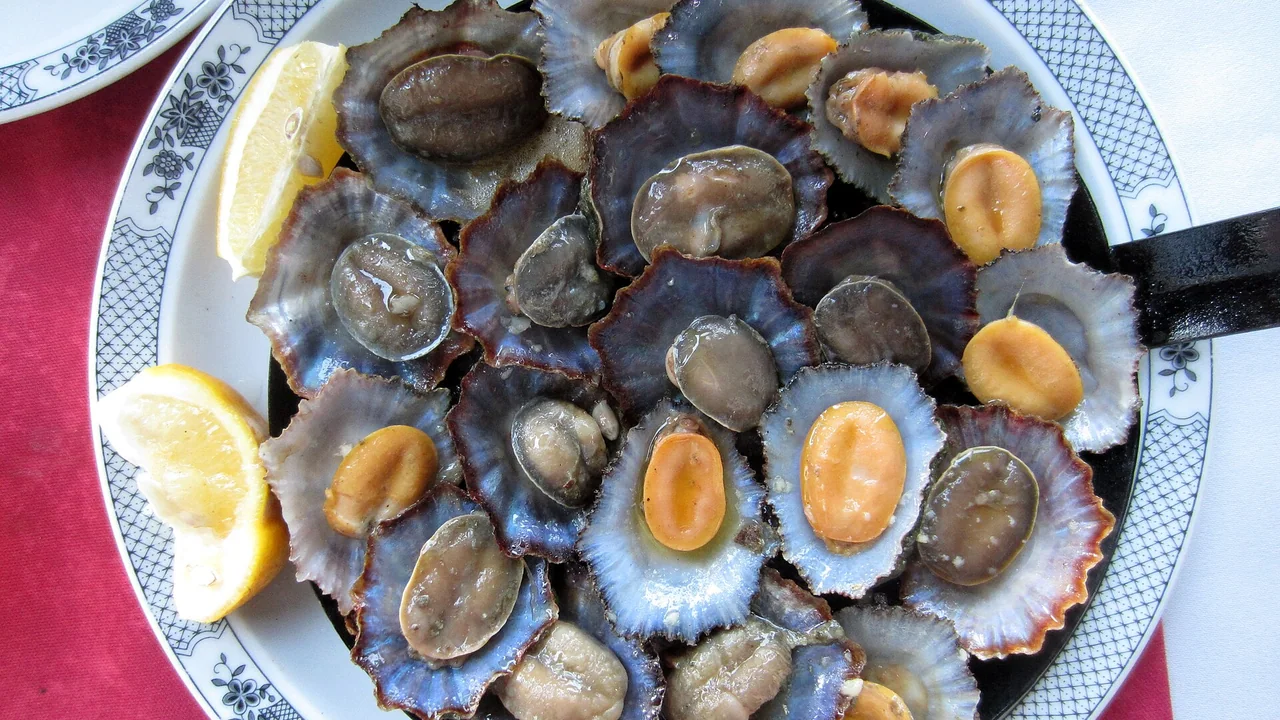
Build each Madeiran meal around one centrepiece: beef espetada roasted on a bay laurel skewer, a picado platter to share, or a pan of lapas in garlic butter, with bolo do caco to mop up what’s left. Bolo do caco is bread, not cake, made with sweet potato in the dough. And if you’re here between 1 November and 31 May, it’s the limpet closed season, which changes the question to ask before you order lapas.
Espetada in Estreito de Câmara de Lobos
Visit Madeira describes espetada as chunks of beef seasoned with garlic and bay leaf and roasted over charcoal. The laurel stick is the traditional skewer, though metal ones have replaced it in many kitchens. In Estreito de Câmara de Lobos, two restaurants have made it their business.
As Vides, on Rua da Achada, says it has grilled beef on bay-laurel sticks over acacia embers since 1950. Its own menu, read on its website on 17 November 2026, lists traditional beef cubes on a laurel skewer at €18.90 (the same line gives €47.25 a kilo, so that’s a 400 g skewer), a skewer without the laurel stick at €17.90, and bolo do caco with garlic butter at €3.80. Sides such as milho frito, rice and chips start at €5.20. Doors open daily for lunch from 12:00 to 16:00 and dinner from 19:00 to 22:30.
Restaurante Santo António, on Estrada João Gonçalves Zarco, has served espetada on a bay stick since 1966 and opens every day from 12:00 to 23:00, according to its site. Between the two, As Vides suits a planned lunch or dinner inside its two service windows; Santo António serves straight through from 12:00 to 23:00, so it’s the one for a meal at 17:00 after a day on the coast.
Milho frito is the side that surprises people: cornmeal is cooked, left to cool, cut and fried until crisp outside. It’s what the beef wants next to it, and it’s a better pairing than chips.
Bolo do caco, prego and picado
Bolo do caco is the warm bread served with garlic and parsley butter, and the same bread holds a prego, a steak sandwich of tender beef. Order the bread with the espetada, not on top of a prego lunch; one bread dish per meal is plenty.
Picado is the dish to share: pieces of beef on a platter with fried potatoes, set in the middle of the table. If your group wants different mains, split the order: one picado, one fish, and everyone picks from the platter.
Tuna steak, bife de atum, is the order for anyone who isn’t a beef eater. The steaks are marinated for hours, then fried in hot oil, and the marinade becomes the sauce.
Lapas and the closed season
Lapas are limpets, served in the pan with garlic, butter, parsley and lemon, usually as a starter. They’re good with bolo do caco for the sauce.
There’s a sourcing question behind the pan. Under the regional harvesting rule checked on 16 November 2026, Madeira’s limpet closed season runs from 1 November to 31 May, and fresh limpets caught in that period can’t be sold or circulated. It’s a rule about the harvest, not a ban on the dish.
So between November and May, ask where and when the lapas were caught before you order them. If someone at the table has a shellfish allergy, give them their own bread: the bolo do caco on the table is there to mop up the lapas butter.
Filete de espada: fish with fruit
Filete de espada is black scabbardfish, breaded and fried the traditional way. Visit Madeira ties the fishery to Câmara de Lobos and serves the fish with Madeira banana or passion fruit. The pairing sounds odd and works: the fruit cuts through the frying. If you’ve had espetada the night before, make this the lunch on your Funchal day.
Poncha, born in a fishing harbour
Poncha is aguardente de cana, sugarcane spirit, stirred hard with a wooden mexelhote. Visit Madeira places its first glass in the fishing village of Câmara de Lobos, made to warm fishermen on cold nights, and calls that version Poncha à Pescador. Passion fruit is now the popular variant, and tangerine, English tomato and mint have joined the range. Most bars and restaurants on the island make it, so start at the village harbour and order the original first.
Give the drink its own stop instead of adding it to a meal with wine. If you’re driving that day, the driver orders without alcohol: Portugal’s limit is 0.5 g/l, and 0.2 g/l for probationary drivers, as the car hire guide explains.
A poncha often comes with a dentinho, a free snack from the house such as peanuts or lupin beans.
Mercado dos Lavradores
Funchal’s market is where the menu vocabulary turns into stalls: fishmongers, fruit and flowers. The city portal gives hours of Monday to Friday 7:00-19:00 and Saturday 7:00-14:00, closed on Sundays and holidays (the Funchal guide covers the tiles and the December Market Night). Go on a weekday morning, then eat lunch somewhere else.
What the label on a Madeira wine tells you
Madeira wine isn’t a single sweetness style. The Madeira Wine Company’s grape guide associates Sercial with a dry style, Verdelho with medium-dry wine and Bual, also called Boal, with medium-sweet wine. Visit Madeira describes Malvasia as sweet and full-bodied; the producer’s guide also calls it Malmsey.
Most of the Madeira you’ll taste isn’t from those four grapes, though: the Madeira Wine Company says the red Tinta Negra makes about 80% of the island’s production and goes mainly into 3-year-old wines. So the generic bottle with an age on it is most likely Tinta Negra, and a label that names Sercial, Verdelho, Bual or Malvasia is the other route. Start dry if you drink dry, and order a 3-year glass next to a varietal one to compare.
For a tasting, Blandy’s Wine Lodge at Avenida Arriaga 28 in Funchal lists, on its site on 17 November 2026, a Premium Tour at €23: 45 minutes through the cooperage, ageing rooms and family museum, ending with three Madeiras. English departures run Monday to Friday at 10:30, 14:00, 15:00, 16:00 and 17:00, with Saturday and Sunday times on the same page. The Vintage Premium ticket at €59 adds five wines, one a Frasqueira (a single-harvest wine), and runs 1 h 30 on weekdays at 16:30 in English. Children aged 6 to 17 pay €8.40; under 6 go free. A free-cancellation window of 24 hours applies.
Bolo de mel, broas and the Christmas table
Bolo de mel is made with sugarcane honey, spices, butter, lard, walnuts and candied citrus peel, so it isn’t vegetarian-friendly. Visit Madeira calls it a Christmas cake that keeps for months, which makes November the right time to see it in bakery windows. Broas, crunchy outside and soft within, are the lighter souvenir, and carne de vinha d’alhos, pork marinated in white wine and garlic, is what Visit Madeira calls a typical dish at Madeiran festivals.
Three meals if your time is short
- Lunch in Estreito: an espetada with bolo do caco and milho frito at As Vides, between 12:00 and 16:00, with Cabo Girão or Câmara de Lobos on the same coast.
- A weekday morning at Mercado dos Lavradores, then Blandy’s Premium Tour in the afternoon.
- A poncha at the Câmara de Lobos harbour before dinner, with a driver who stays on water.
Photos
Read also

What to see · 6 min read
Cabo Girão Skywalk: Ticket, Hours and Getting There
Updated · 17 November 2026Cabo Girão skywalk: €5 entry paid through SIMplifica, opening 08:00-20:00, 580 m of cliff, how to get there from Funchal and the Rancho cable car below.

Car hire · 9 min read
Car Hire in Madeira: Licence, Card Hold and Mountain Roads
Updated · 17 November 2026Car hire on Madeira: licence rules, National's €600 or €1,000 card hold, insurance gaps, free expressways and summit closures.

Regions · 7 min read
Pico do Arieiro and Pico Ruivo: PR1 Status, Fees and Access
Updated · 17 November 2026Madeira's two highest peaks: the PR1 ridge trail and fees, the road and bus to Arieiro, the short way up Pico Ruivo when PR1 is shut, and what to check.

What to see · 6 min read
Fanal Forest: Old Til Trees, Fog and the Winter Lake
Updated · 17 November 2026Fanal's old Til trees on Madeira's north-west uplands: 48 km from Funchal, fog you can't book, the winter lake, closed PR13 and PR14, car or tour.